







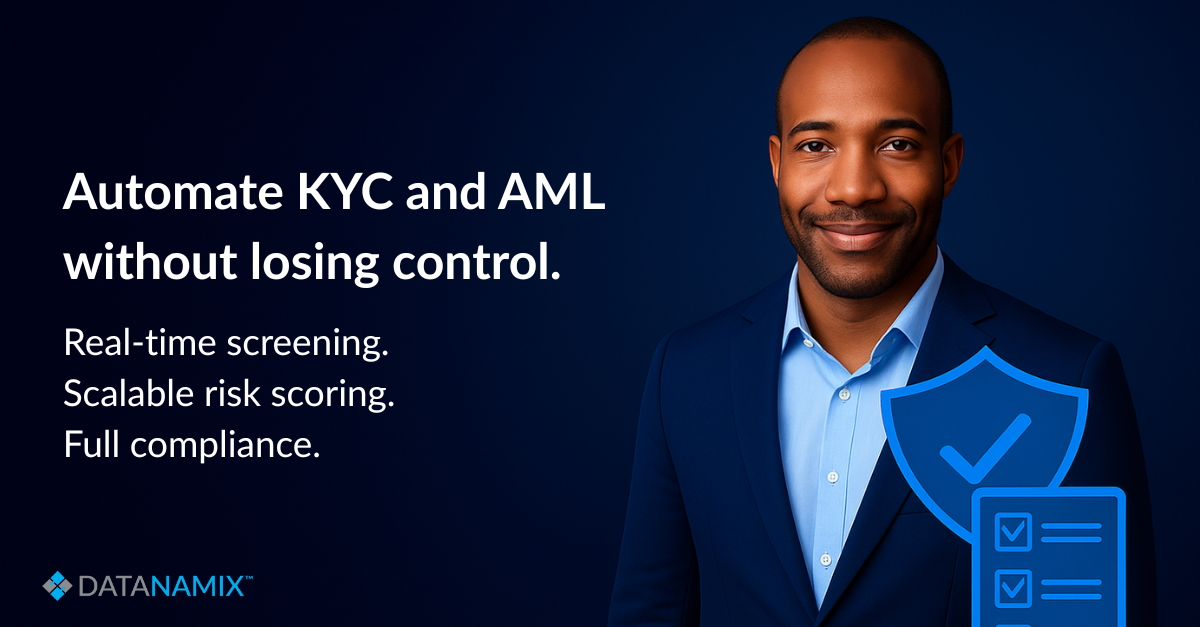
If you’re a Risk and Compliance Manager, you’ve probably asked: How can I automate KYC and AML processes without compromising accuracy or control? Between evolving FICA obligations and increasingly complex AML regulations, the manual approach is no longer sustainable.
KYC and AML are two sides of the same regulatory coin. Identity verification on one side, financial crime prevention on the other. Automating both processes is no longer just a digital convenience; it’s a strategic necessity.
Businesses that automate KYC and AML processes reduce risk, accelerate onboarding, and strengthen compliance across the board, while freeing up teams to focus on higher-value analysis and decision-making.
Why automate KYC in the first place?
Manual KYC processes are risky. Errors slip through the cracks, documents get lost, and human oversight can result in costly compliance failures. When you automate KYC, you eliminate many of the vulnerabilities associated with human handling.
Automation ensures faster identity verification, fewer compliance gaps, and a smoother onboarding journey. It’s about creating a seamless pipeline that verifies, checks, scores, and reports without constant intervention.
What does it take to automate KYC successfully?
When it comes to automating KYC processes, a basic ID check will not cut it. True automation involves an entire lifecycle, from batch data submission to identity and address verification, through to AML screening and risk scoring. All of this must be done at speed and at scale.
The key is to choose a system that actively reduces your workload and improves accuracy — turning KYC from a liability into a streamlined workflow.
What are the benefits of automating KYC?
Automating KYC goes far beyond saving time. It improves the quality and consistency of your compliance efforts, reduces dependency on manual labour, and lowers both operational risk and cost. It also enhances audit readiness—delivering real-time reporting, digital trails, and traceable scoring on demand.
For Risk and Compliance Managers, that means fewer gaps, faster reviews, and smoother regulator interactions.
How do you choose the right solution to automate KYC?
Not all solutions are created equal. To automate KYC effectively, look for tools that offer:
- Batch processing capabilities
- Real-time status updates and monitoring
- Automated AML list matching and scoring
- Integration with golden source databases (government records, credit bureaus, sanctions lists, etc.)
- Risk scoring based on your internal Risk Management and Compliance Programme (RMCP)
A strong API-driven solution is essential—one that’s flexible enough to integrate into your existing ecosystem, intelligent enough to adapt to changing regulatory requirements, and scalable enough to handle high volumes without compromising performance.
Automate KYC processes with confidence — here’s how Datanamix makes it effortless
At Datanamix, we built the KYC Batch Automation API to solve exactly this challenge: helping Risk and Compliance Managers automate KYC processes with precision and ease. Our API enables bulk submission of customer data, verification against trusted sources, screening against global AML and sanctions lists, and delivery of automated scoring and risk reports—all while supporting full FICA compliance.
For teams needing even more control, the KYC Infinite Suite (Live, Batch, and Monitor modules) provides a future-ready ecosystem to automate KYC and AML workflows from end to end. Seamless integration, real-time insights, and built-in intelligence—that’s the Datanamix difference.
Ready to stop asking how can I automate KYC processes and start doing it? Contact us here.