






Does Continuous Facial Recognition with Liveness replace multi-factor authentication?
No. It is intended to complement multi-factor authentication by adding identity assurance during an active digital session, while multi-factor authentication continues to protect access and selected actions.
The practical answer to “Does Continuous Facial Recognition with Liveness replace multi-factor authentication?” is that the two controls perform different jobs. Multi-factor authentication asks whether the user can present the required authentication factors. Continuous Facial Recognition with Liveness adds a signal about whether the authorised person remains present later in the session.
What does multi-factor authentication do?
Multi-factor authentication, or MFA, requires evidence from more than one category of authentication factor. An organisation may combine something the user knows, such as a password, with something the user has, such as a device or one-time PIN, or something the user is, such as a biometric.
This makes MFA an important defence against unauthorised access. It can also be used again when a user attempts a sensitive action. The design of that authentication journey remains an organisational decision based on risk, regulation and customer experience.
What does Continuous Facial Recognition with Liveness add?
Continuous Facial Recognition with Liveness focuses on identity assurance after access has been granted. Its purpose is to give the application another signal about whether the authorised person remains present during the session.
The technology is designed to work alongside existing authentication and session-management infrastructure. The organisation retains control over how the identity signal is used and what response should follow.
This means the technology does not decide whether a transaction should be approved. It supplies identity context that the organisation can use with its existing controls.
When could MFA and identity assurance work together?
Consider a customer who signs into a financial application and later performs a more consequential action. The organisation may use MFA at login, apply transaction and device risk controls during the session, and require step-up authentication for the action itself.
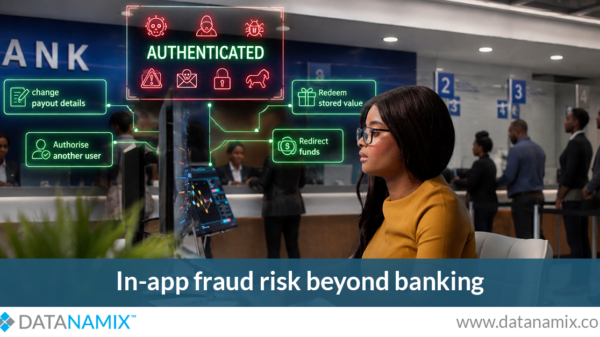
Continuous Facial Recognition with Liveness could add another layer of identity assurance at points such as:
- Adding a new beneficiary
- Changing contact or payout details
- Increasing a transaction limit
- Linking a new wallet or device
- Approving a high-value payment
The appropriate combination will depend on the organisation’s risk model. Not every action needs the same level of assurance, and a biometric signal should not be treated as the only basis for a sensitive decision.
What happens if the authorised person cannot be confirmed?
The integrating organisation decides how the application responds. Depending on its policy, it could request another authentication step, pause the action, lock the session, generate an alert or refer the event for review.
This separation of roles is important. The biometric layer supplies a signal. The application and the organisation’s control framework determine the consequence.
What does the technology not replace?
Continuous Facial Recognition with Liveness does not replace:
- Identity verification during onboarding
- Passwords, passkeys, one-time PINs or other authentication methods
- Device binding and endpoint security
- Transaction monitoring and behavioural analytics
- Malware or remote-access detection
- Customer education and fraud-response processes
- Human review where a decision requires it
It also confirms identity, not intent. A legitimate customer can still be deceived, manipulated or pressured into performing an unsafe action. That risk requires different controls.
How can South African organisations assess the fit?
The strongest starting point is a specific use case. An organisation should identify which in-app actions carry greater risk, what evidence it already uses and whether an additional identity signal would materially improve the decision.
Datanamix has introduced Continuous Facial Recognition with Liveness to South Africa. The solution is powered by the YEO Continuous Facial Recognition SDK and is positioned to work alongside existing authentication and fraud controls rather than replace them.
Book a demo with Datanamix to explore how the technology could support your existing application and control environment.