




Summary
Identity verification establishes who a user is during onboarding or authentication. Continuous identity assurance addresses what happens afterwards: whether the same verified person remains in control of the session.
For organisations managing sensitive data, transactions and communications, these capabilities should form part of a layered identity-security framework.
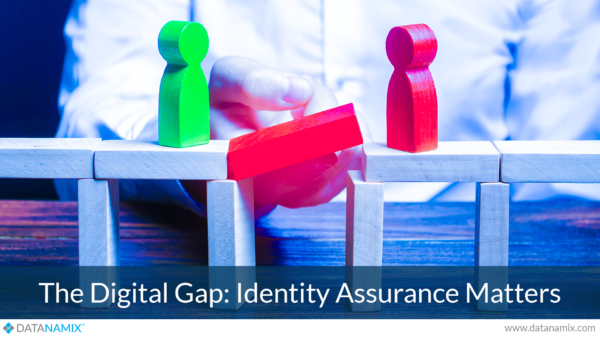
The identity assurance problem
A successful login proves that the correct credentials or biometric information were presented at a specific time. It does not guarantee that the authenticated user will remain in control of the device or session.
This distinction matters because unauthorised access can occur after authentication. Common scenarios include stolen session tokens, credential sharing, social engineering, insider activity and physical takeover of an authenticated device.
The security question is therefore no longer only, “Who logged in?” It is also, “Who is using the system now?”
Core identity-security concepts
Identity verification
The process of confirming that a person is who they claim to be. It may include document verification, identity-data checks, facial matching or biometric verification.
Authentication
The process of granting access based on credentials, authentication factors or biometrics.
Liveness detection
Technology used to determine whether a biometric sample is being presented by a live person rather than through a photograph, video or similar presentation attack.
Continuous Facial Recognition
Ongoing facial comparison used to help confirm that the verified person remains present during a digital session.
Continuous identity assurance
A broader security approach that maintains confidence in the user’s identity throughout an interaction instead of relying exclusively on the initial login.
Secure Enterprise Messaging
Protected messaging, voice and video communication that combines verified identities with enterprise-grade encryption.
Point-in-time verification versus continuous assurance
Point-in-time identity verification asks:
- Is this person’s claimed identity valid?
- Does the person match the supplied identity information?
- Should access be granted now?
Continuous identity assurance asks:
- Is the verified person still present?
- Has another individual taken control of the session?
- Should the current level of access continue?
- Does a sensitive action require additional verification?
The two approaches solve different parts of the identity-security problem and are most effective when used together.
A layered identity assurance model
A modern identity assurance strategy can contain five layers:
- Onboarding: Verify the person and their identity information.
- Authentication: Grant access using appropriate authentication factors.
- Session assurance: Confirm the verified user remains present.
- Transaction assurance: Apply additional checks to high-risk actions.
- Communication assurance: Protect sensitive messaging, voice and video interactions.
Through its partnership with YEO Messaging, Datanamix provides access to Continuous Facial Recognition with Liveness. The capability is powered by YEO Messaging’s Continuous Facial Recognition SDK and can complement existing authentication and fraud-prevention technologies.
Alignment with Zero Trust security
Zero Trust security does not treat a successful login as unlimited proof of trust. Access decisions are continually evaluated according to identity, context and risk.
Continuous identity assurance supports this model by reducing reliance on a single authentication event. It does not replace identity providers, multi-factor authentication or existing security infrastructure. Instead, it adds another identity signal during the session.
Potential use cases
- Financial and payment platforms
- Privileged system administration
- Remote working environments
- Digital customer-service platforms
- Confidential messaging and video calls
- Access to sensitive personal or business information
- High-risk transaction approval
Implementation should be proportionate to the risk and designed with privacy, transparency and user experience in mind.
The role of Datanamix
Datanamix brings together onboarding verification, identity verification, Continuous Facial Recognition with Liveness and Secure Enterprise Messaging.
Together, these capabilities help organisations move from one-time authentication towards a more resilient identity assurance framework—one that verifies identity before access and helps maintain confidence after access has been granted.
Contact Datanamix to discuss a layered identity assurance strategy.