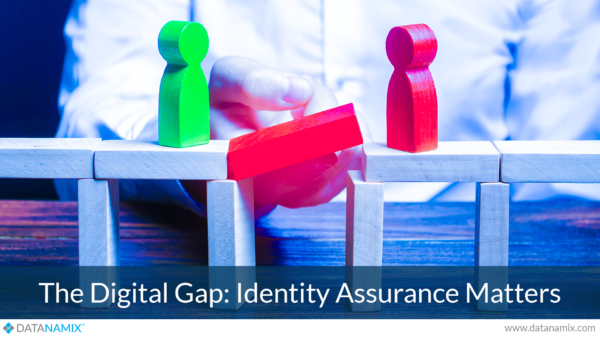



Digital onboarding and strong authentication help organisations establish who a user is when access begins. They do not automatically prove that the same person remains in control throughout the session.
This gap is becoming more important as customer self-service, remote work, digital transactions and confidential online communication expand. Continuous Facial Recognition with Liveness provides an additional identity signal after login, helping organisations maintain confidence in the person currently using the application.
The risk begins after legitimate authentication
Identity fraud does not always start with a fraudulent application. Criminals can target existing accounts using stolen credentials, phishing, social engineering, compromised devices and session takeover.
A traditional security model may correctly authenticate the customer and still fail to identify that somebody else later controls the session. Continuous identity assurance addresses this temporal limitation.
What Continuous Facial Recognition with Liveness adds
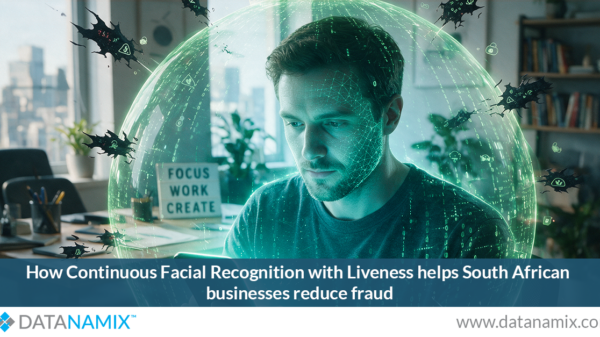
The technology combines continuous facial comparison with real-time liveness detection and anti-spoofing controls. Facial comparison helps establish whether the active person matches the enrolled user, while liveness detection helps identify certain attempts to present a photograph, recording or other non-live biometric input.
Datanamix is bringing this capability to South Africa through YEO Messaging’s Continuous Facial Recognition Software Development Kit. The SDK is designed to integrate into existing web and mobile applications.
A complementary security layer
Continuous facial recognition should not be viewed as a substitute for secure onboarding, multi-factor authentication, device security or fraud monitoring. Each control addresses a different point in the identity lifecycle.
A layered model can:
- Verify identity during onboarding
- Authenticate the user when access begins
- Evaluate whether the same user remains present
- Apply additional scrutiny to sensitive actions
- Protect confidential communications
Balancing assurance and customer experience
When identity confidence is low, organisations often introduce repeated authentication challenges, delay activity or block a transaction. These controls can reduce risk but also create friction for legitimate customers.
An ongoing identity signal can help an organisation make more informed, risk-based decisions. The design should still be proportionate: not every interaction requires the same level of assurance.
Where session assurance has the greatest value
The strongest use cases are those in which a change of user could cause significant harm, including high-value payments, profile changes, access to regulated data, remote administration and confidential customer-service interactions.
Biometric deployment should be supported by privacy assessments, clear customer communication, secure data governance, accessibility planning and monitoring for inaccurate outcomes.
Extending verified identity into communications
Digital trust also depends on the security of messages, calls and video interactions. Secure Enterprise Messaging, powered by YEO Messaging technology, embeds encrypted communication into existing applications and links interactions to continuously verified identities.
This creates a more coherent assurance model: the organisation can protect both access to the application and the sensitive conversation taking place within it.
Why this matters for South African organisations
Financial services, regulated businesses and organisations managing sensitive personal information need security that supports digital growth without undermining usability. Continuous identity assurance offers a way to strengthen session-level trust while preserving established technology investments.
The Datanamix and YEO Messaging partnership brings together identity verification, fraud prevention, Continuous Facial Recognition with Liveness and Secure Enterprise Messaging. The result is a layered approach that extends trust beyond the initial login.
Book a demo with Datanamix to explore continuous identity assurance.