







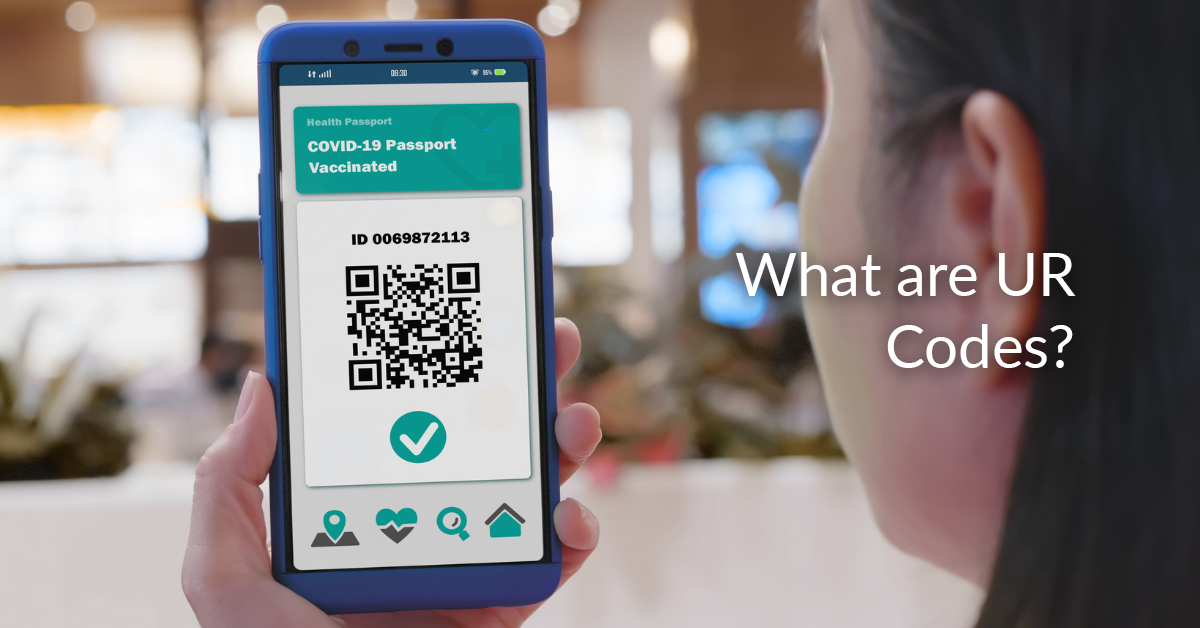
UR Codes are an advanced, digital-camera-scannable optical barcode solution to enhance security and identity verification. UR Codes are used in government-issued IDs, credit reports, health insurance cards, and diplomas. Unlike traditional photo IDs, UR Codes encode facial data for more precise identity matching. UR Codes leverages FaceTec’s innovative technology to provide a more secure, privacy-focused identity verification system. Using UR Codes eliminates the risks associated with static photo-based authentication methods.
The security and privacy benefits of UR Codes
UR Codes are designed with security and privacy at their core. Unlike standard photo IDs that openly display facial images, UR Codes encode face feature vector data that cannot be reconstructed into a human-viewable image. This ensures that personally identifiable information (PII) is well-protected. UR Codes can store PII in plain text, partially encrypted, or fully encrypted formats to provide an additional layer of security. Using FaceTec’s cutting-edge facial recognition technology, UR Codes significantly reduce identity fraud risks.
How UR Codes enable remote identity verification
UR Codes streamline remote identity verification by leveraging facial biometric data. Each UR Code encodes facial features from a 3D FaceMap or a 2D photo obtained from a trusted source, making identity matching far more accurate than traditional photo ID verification. When a UR Code is scanned, it is instantly compared to a live, 3D facial scan to confirm identity. This makes UR Codes ideal for secure, real-time authentication in various applications, from financial services to healthcare.
The universal and cost-effective implementation of UR Codes
UR Codes utilise the widely used QR encoding standard, making them easy to implement across various industries. They can be printed on physical documents or displayed on digital screens, ensuring versatility in both online and offline environments. With minimal costs, businesses and institutions can integrate UR Code scanning technology into existing verification processes. FaceTec’s UR Code solution allows organisations to achieve a seamless and highly secure identity verification process without expensive infrastructure changes.
UR code validation and anti-tampering features
One of the key advantages of UR Codes is their built-in security mechanisms. Each UR Code contains internal security elements such as hashes and checksums, which the UR Matcher verify every time a code is scanned. Additionally, UR Codes can incorporate asymmetric digital signatures from encoding organisations, allowing any relying party to verify their authenticity. A unique URID# and hash can be stored and verified independently to further strengthen security and prevent tampering.
The versatile applications of UR Codes
UR Codes have a wide range of use cases across multiple industries. They can be used to biometrically link digital accounts to individuals, ensuring secure authentication. Government agencies can integrate UR Codes into passports, national IDs, and voting ballots for enhanced security. Financial institutions can embed UR Codes in credit cards and credit reports for fraud prevention. Educational institutions can utilise UR Codes in diplomas and academic credentials to prevent forgery. UR Codes provide an advanced, secure, and reliable solution for digital or physical identity verification.
Experience secure identity verification with Datanamix
Datanamix, in collaboration with FaceTec, offers an advanced UR Code solution designed to enhance security, privacy, and identity verification. Whether used for government documents, financial transactions, or digital authentication, UR Codes provide a cutting-edge approach to secure identity management. With Datanamix, businesses and institutions can seamlessly integrate UR Code technology to protect sensitive information and ensure fraud-proof authentication.
Want to see UR Codes in action? Book your demo here.